
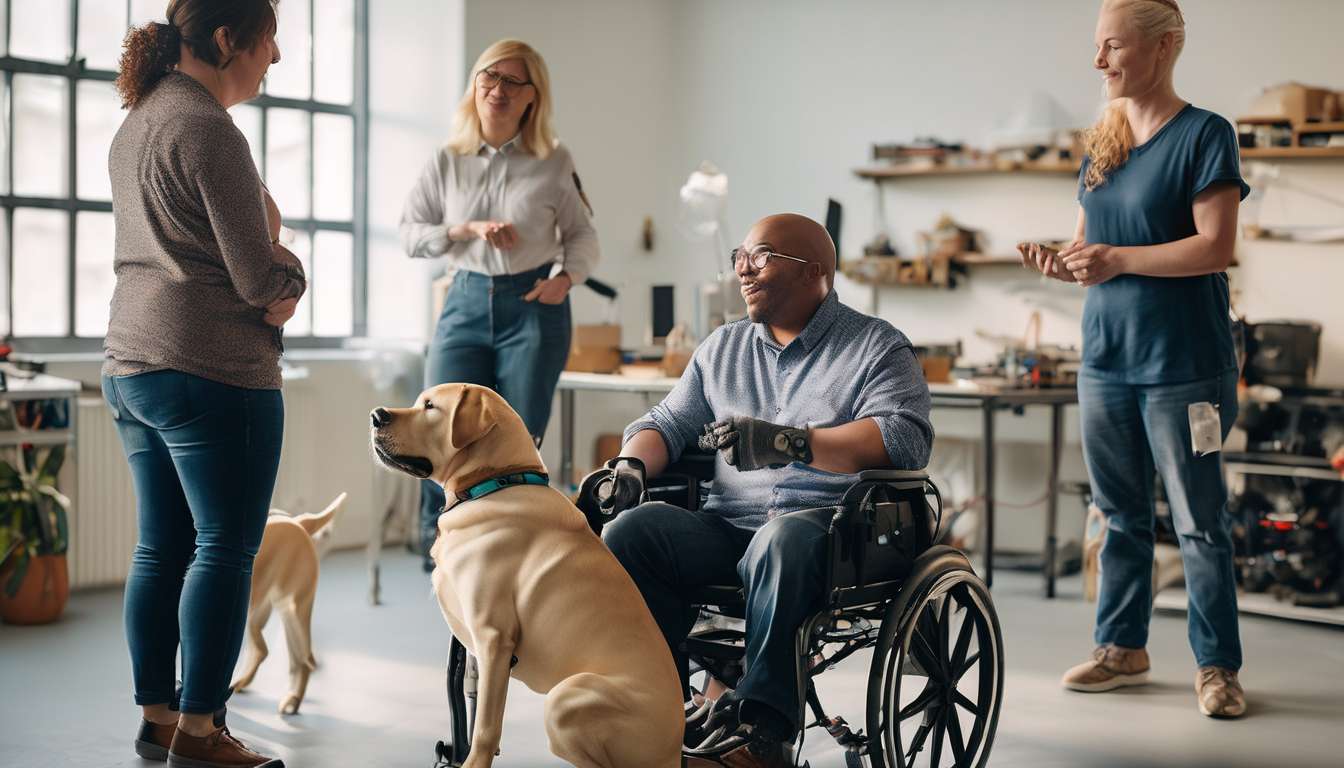
How can we ensure that everyone feels seen and celebrated when they step in front of the camera?
Accessibility in adult photography goes beyond compliance — it transforms participation, dignity, and creative expression.
Rethink the physical environment.
- Make studio layouts navigable for people with mobility differences (wide, unobstructed paths; ramps; adjustable seating).
- Provide adjustable lighting and camera rigs so subjects can remain comfortable without awkward positioning.
- Offer tactile props and non-slip surfaces for safer, more confident posing.
Adapt communication and consent processes.
- Use captioned or written consultations and visual aids for people with hearing loss or cognitive differences.
- Allow flexible session pacing and frequent check-ins to accommodate sensory sensitivities and energy levels.
- Center clear, repeatable consent practices and document boundaries and preferences before and during shoots.
Train teams in inclusive practices.
- Teach inclusive language that respects identities, bodies, and autonomy.
- Train staff on bodily autonomy, trauma-informed approaches, and how to respond to requests or discomfort.
- Encourage collaborative creative direction so subjects feel ownership of their image and choices.
Design accessible services as part of business and artistic growth.
- Recognize that accessible practices broaden client bases and lead to better artistic outcomes.
- Offer personalized packages (time-flexible sessions, accompaniment options, sensory-friendly times) to meet diverse needs.
- Collect feedback from clients with disabilities to continually refine practices and signal commitment.
The result: By combining physical adjustments, communication adaptations, and team training, studios create spaces that are collaborative rather than exclusionary — where intimacy, consent, and creativity are genuinely available to all.
Inclusive Studio Layouts
We design studio layouts that prioritize clear circulation, accessible equipment placement, and adaptable sets so everyone can participate comfortably.
We arrange wide, unobstructed pathways and consistent surface levels so people using mobility aids can move without anxiety.
We place lighting stands, props, and seating to reduce reach strain and make switching positions simple, supporting accessible photography practices that welcome varied bodies and abilities.
We label controls and storage at reachable heights and use clear signage so folks feel oriented and respected.
We incorporate quiet zones and private changing areas so participants can prepare with dignity and discuss boundaries.
We keep adaptive equipment nearby and organized, so using it feels normal and seamless rather than exceptional.
We train staff to offer options, explain procedures, and obtain inclusive consent every step of the way, centering agency and comfort.
We solicit feedback from participants to iteratively refine the space, because belonging grows when design, policy, and practice align to remove barriers and honor people’s needs.
Adjustable Equipment Options
We offer a range of adjustable lighting, seating, and support options so participants can easily find comfortable, camera-ready positions.
We design stations with height-adjustable stools, bolsters, and modular supports that let people shape their own poses without strain.
Our goal is accessible photography that centers dignity: controls are within reach, grips are slip-resistant, and surfaces adapt to mobility devices.
We train staff to suggest adaptive equipment thoughtfully and to respect boundaries, so adjustments happen with clear, inclusive consent every step of the way.
We keep a variety of soft and firm supports, portable ramps, and variable-angle backrests to accommodate different bodies and comfort needs.
Lighting arms and mounts move quietly and lock securely, reducing sudden shifts that can unsettle participants.
By offering choices and inviting participants to guide setup, we foster a welcoming environment where photographers and subjects collaborate.
That collaborative approach makes accessible photography feel natural, empowering, and rooted in mutual respect.
Tactile Props and Safety
Tactile props are curated and maintained for safety and comfort.
We provide a curated selection of tactile props — from textured fabrics to weighted blankets and handheld supports — and ensure each item is cleaned, inspected, and paired with clear safety guidance before use.
We label adaptive equipment clearly, note any contraindications, and offer alternatives when a prop doesn’t suit someone’s needs.
We store props hygienically, rotate items to prolong life, and replace anything showing wear.
Setups are described clearly so participants feel welcome and informed.
We set up tactile options so everyone feels welcome and seen, describing textures, weights, and intended use in plain terms.
Team training focuses on safe handling, consent, and ongoing comfort checks.
We train our team to demonstrate safe handling, show how to secure or release supports, and to respect boundaries at every step.
We encourage questions and check comfort frequently, integrating inclusive consent into every interaction so people can join without pressure.
The overall approach blends reliable equipment with straightforward safety procedures.
By combining reliable adaptive equipment with straightforward safety procedures, we create sessions that are both creative and safe, helping participants relax, express themselves, and belong.
Accessible Communication Methods
We use multiple communication methods—clear verbal descriptions, written prompts, visual symbols, and tactile cues—so everyone can understand options, express preferences, and give consent comfortably.
We check in frequently, speak plainly, and offer written or digital summaries of session plans so participants feel informed and secure.
When someone prefers nonverbal signals, we establish simple, consistent gestures or cards that respect their pace and boundaries.
We describe equipment function and positioning before use, including adaptive equipment, so people know how supports will feel and perform.
We invite questions, repeat information in alternate formats, and adjust wording to match each person’s comfort level.
We label tools and props with high-contrast visuals or tactile tags and provide sample touches when requested, building trust through predictable interactions.
We center accessible photography practices and prioritize inclusive consent language to create a welcoming environment where everyone’s needs are acknowledged and respected.
Flexible Consent Practices
We tailor consent processes to each participant’s communication preferences and comfort level.
- Offer verbal, written, visual, or tactile options.
- Allow consent to be given, paused, or revised at any time.
- Document each participant’s chosen method of consenting to respect autonomy.
We create step-by-step consent flows using plain, accessible formats.
- Use plain language, symbols, large print, or tactile cues.
- Design flows so everyone feels informed and safe.
We invite participants to choose how they respond.
- Options include spoken affirmation, signed forms, pictograms, or a simple gesture.
- Record the selected response method to honor individual choice.
We normalize ongoing check-ins so consent remains current.
- Participants can stop or change their mind at any time without needing to explain.
- Regularly verify comfort and willingness throughout sessions.
We integrate adaptive equipment and nonverbal prompts.
- Include accessible photography interfaces, tactile indicators, or other assistive prompts.
- Use these aids to support clear nonverbal communication.
We provide clear options for partial consent.
- Specify what activities are allowed and which are not, so boundaries are explicit and honored.
- Enable granular consent choices rather than all-or-nothing approvals.
Our inclusive consent approach centers belonging and collaboration.
- Listen, adapt, and verify understanding.
- Ensure consent is collaborative, flexible, and fully accessible rather than one-size-fits-all.
Staff Training and Sensitivity
We train every team member in disability awareness, trauma-informed care, and communication techniques so they can confidently create respectful, safe experiences for all participants.
We practice plain, person-first language and ask open questions to understand needs without assumptions.
Regular workshops cover:
- accessible photography principles
- how to operate adaptive equipment
- ways to center autonomy through inclusive consent
We role-play scenarios to build habits:
- offering multiple communication modes
- adjusting lighting and framing for mobility or sensory differences
- pausing to check comfort
We debrief after sessions to refine approaches and share what worked.
Hiring prioritizes lived experience and empathy, and mentorship pairs new staff with experienced colleagues who model dignity-centered interactions.
We document accessibility preferences in confidential profiles so repeat clients aren’t retraumatized by explaining basics each visit.
Our aim is to cultivate a team that listens, adapts, and ensures everyone feels seen, respected, and invited into the creative process.
Customized Service Packages
We offer a range of customizable packages that let clients choose the level of support, session length, and sensory or mobility accommodations they want.
We design each package to center comfort and agency, combining accessible photography approaches with clear options so every participant feels seen and safe.
Clients can add adaptive equipment, such as:
- adjustable stools
- grip aids
- lighting controls
We explain how each tool supports posture, access, or sensory preferences.
We include defined options for pacing, break frequency, and environment modulation.
We outline how inclusive consent is obtained and documented before and during sessions.
Pricing is transparent and tied to chosen supports, so people can pick what fits their needs and budgets without surprises.
We welcome collaboration:
- Clients tell us priorities.
- We recommend combinations of services and equipment.
- Together we finalize a plan that respects dignity, fosters belonging, and makes professional photography accessible to a wider community.
Continuous Client Feedback
We solicit ongoing feedback at every stage of the process so we can quickly adjust pacing, supports, and environment to better meet each client’s needs.
We ask clear, respectful questions before, during, and after shoots, and we invite clients to share preferences about lighting, touch, positioning, or wording.
This keeps accessible photography grounded in real experience rather than assumptions.
We use short check-ins and simple tools to capture responses in the moment and afterward:
- Visual cards
- Verbal cues
- Apps
When adaptive equipment changes a pose or sightline, we confirm comfort and effectiveness immediately.
We document feedback to refine consent conversations, ensuring inclusive consent remains explicit and is revisited if conditions shift.
We treat feedback as collaboration, not evaluation.
That helps everyone feel seen, heard, and safe.
By responding promptly to concerns or suggestions, we build trust, improve outcomes, and create a practice where people with diverse bodies and abilities confidently participate in adult photography.
How do you handle payment and billing discreetly for clients who need assistive devices or who require a caregiver to be present?
We handle discreet payment and billing by offering private invoicing, flexible payment options, and clear consent about who receives receipts.
We set billing to a client’s preferred contact.
We mask service descriptions when requested.
We accept caregiver payments with signed authorization.
We keep records secure and limit staff access.
We discuss preferences ahead of time so everyone feels respected and included throughout the booking and payment process.
What measures are in place to protect the privacy and data of clients who use accessibility services, especially when sensitive medical or disability information is shared?
We prioritize client privacy and treat shared medical or disability details as confidential.
We protect information using encrypted records, strict access controls, and limited staff permissions so only authorized team members see sensitive data.
We anonymize data when possible and obtain explicit consent before sharing any personal information.
We provide clear privacy notices to clients explaining how information is used and shared.
We regularly audit our systems and train staff in trauma-informed, respectful handling of personal information to maintain trust and safety.
Are there options for remote or virtual consultations and pre-shoot planning for clients who cannot travel to the studio, and how are accessibility needs assessed in that format?
We offer remote consultations and virtual pre-shoot planning for clients who can’t travel.
These sessions are tailored to feel welcoming and safe.
We use video calls, phone, and secure messaging to:
- review needs
- assess mobility and sensory preferences
- discuss adaptive equipment
Clients are invited to share and co-design the shoot by:
- showing spaces or props on camera
- sharing photos
- providing input on the session plan
We confirm accommodations in writing and remain flexible.
We’ll adjust plans as needed to ensure comfort and accessibility.
Conclusion
You’re creating a more welcoming, empowering photography experience when you prioritize accessibility.
Design inclusive studios.
- Ensure clear, step-free entry and wide pathways.
- Provide adjustable lighting and seating to accommodate sensory and mobility needs.
Offer adaptable equipment and tactile props.
- Use height-adjustable chairs, stools, and camera mounts.
- Provide tactile or textured props and clothing options for clients who benefit from sensory input.
Use accessible communication.
- Offer multiple communication methods (verbal, written, visual aids, and digital).
- Provide plain-language explanations and, when needed, captioning or sign-language interpretation.
Train staff in sensitivity and flexible consent practices.
- Educate team members on disability etiquette, privacy, and trauma-informed care.
- Implement flexible consent processes (verbal consent options, extra time to decide, and clear boundaries).
Craft customized packages that put clients’ needs first.
- Allow session length, pacing, and break options to be tailored.
- Offer choice-driven styling, framing, and image-preference workflows.
Keep soliciting feedback and iterating.
- Collect post-session feedback in accessible formats.
- Use feedback to refine services and policies regularly.
The result: prioritizing accessibility reduces barriers and boosts comfort, participation, dignity, and satisfaction for everyone who walks through your door.